Wood Windows Hybrid Windows Double Hybrid Windows

Find the right type of windows for you in 4 easy steps.
Fenetre Header Juniper 0061

Find the right type of windows for you in 4 easy steps.
Fenetre Header Juniper 0061

Find the right type of windows for you in 4 easy steps.

Fenetre Header Juniper 0061

Find the right type of windows for you in 4 easy steps.

Fenetre Header Juniper 0061

Find the right type of windows for you in 4 easy steps.

Fenetre Header Juniper 0061

Find the right type of windows for you in 4 easy steps.

Fenetre Header Juniper 0061

Find the right type of windows for you in 4 easy steps.

Fenetre Header Juniper 0061
Folding Doors Garage doors
Porte Header Novatech Pure2
Facade Reynaers129548 Header Secondaire

Residential Curtain Wall: Create a Glass Wall for Your Home

Slim Wall35 117119 BMW Lifestyle

When people hear the term curtain wall, they often think of office towers, commercial buildings, or large glazed façades. Yet this solution can also transform a residential project.

In a home, cottage, renovation, or addition, a curtain wall can become what many homeowners envision without always knowing the correct term: a glass wall, a glazed façade, a light-filled corner, a large opening to the backyard, or a room flooded with natural daylight.

It is not simply a larger window. It is a different way of thinking about the relationship between the home, natural light, and the outdoors.


What Is a Residential Curtain Wall?

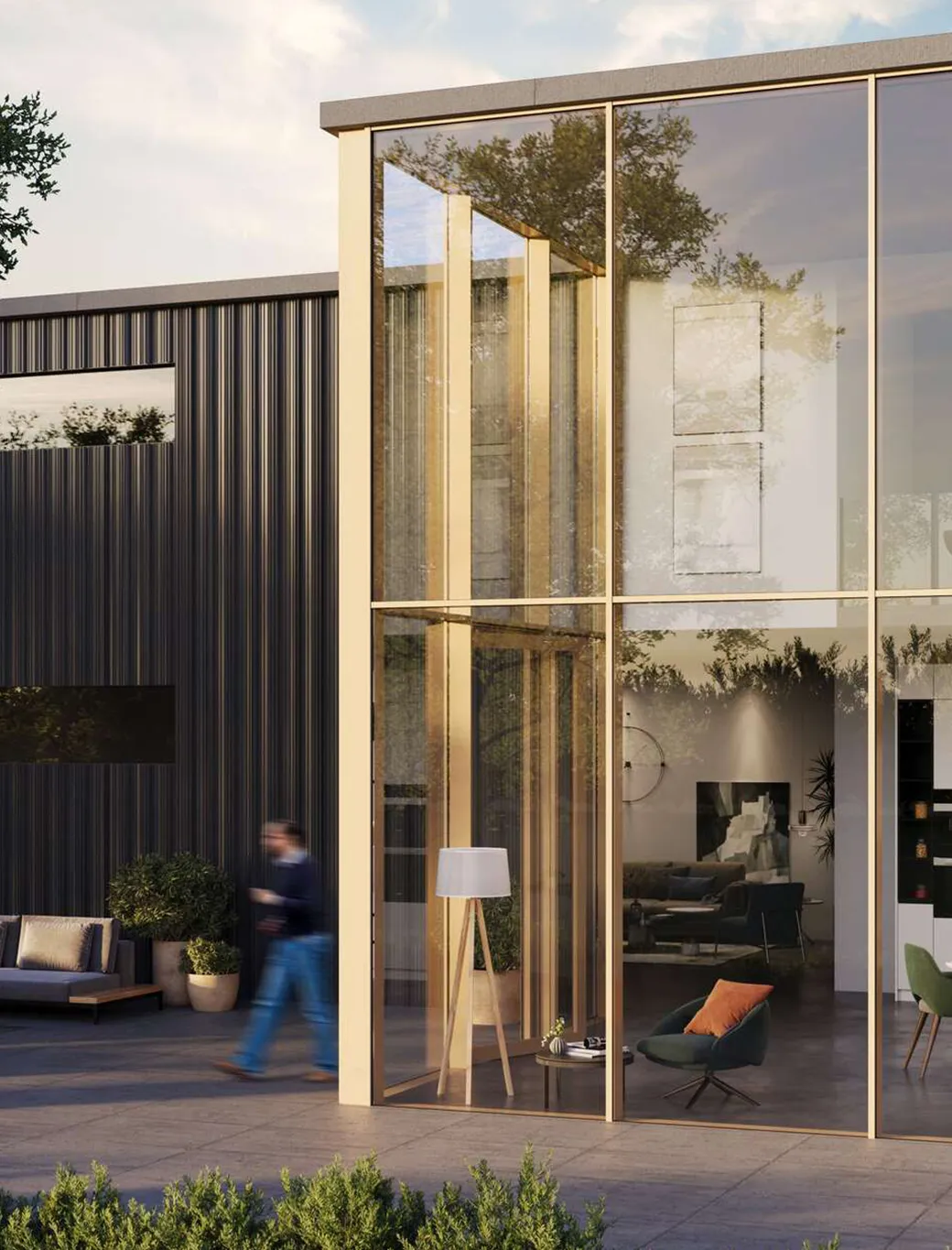
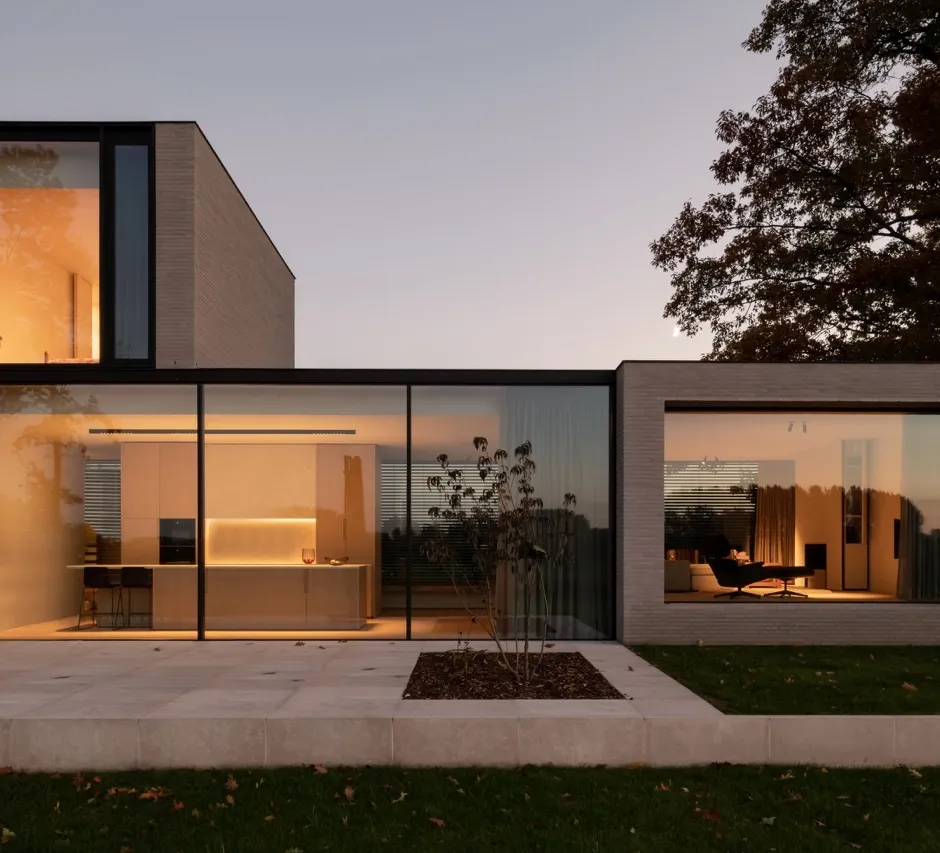
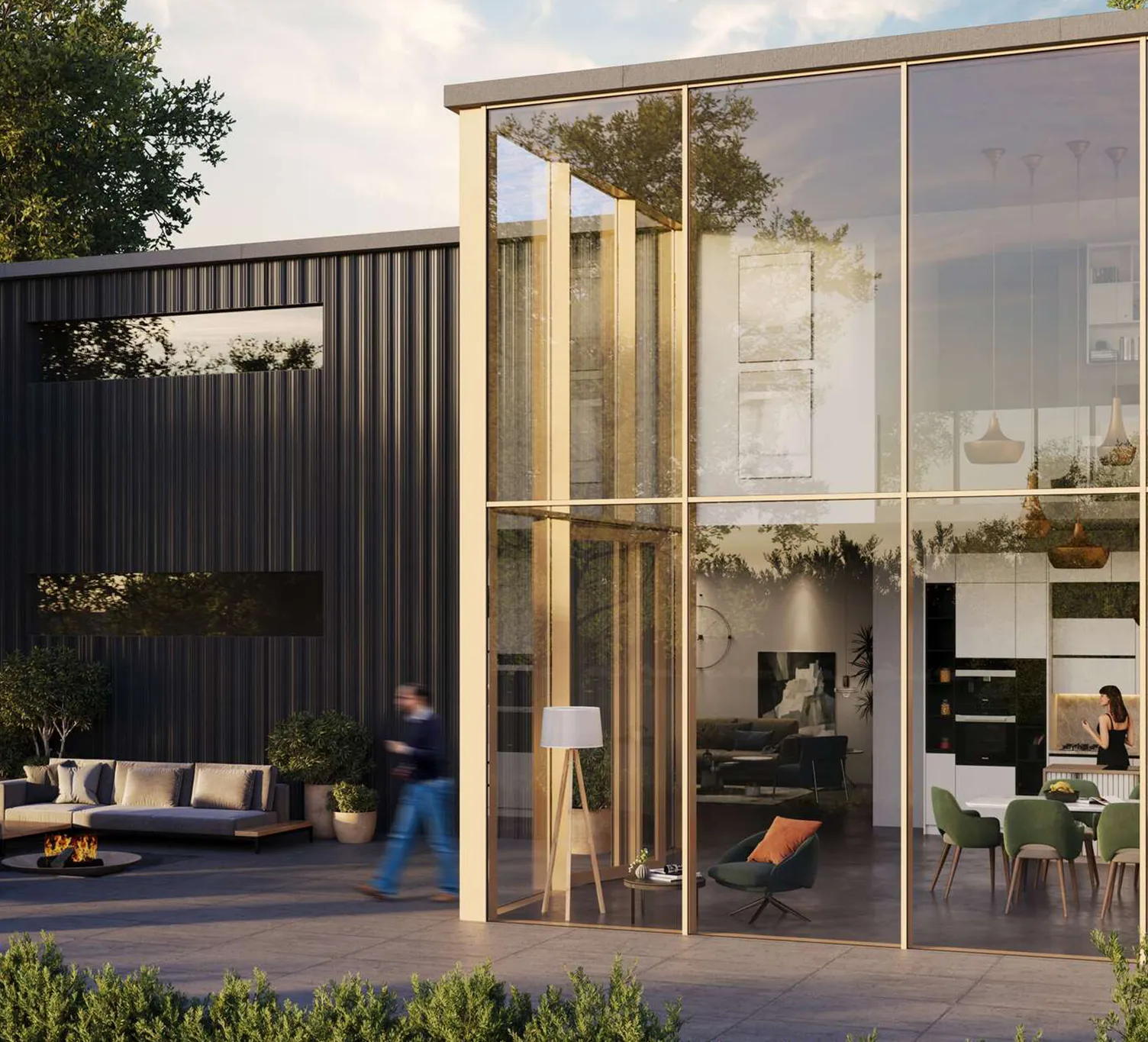
A residential curtain wall is a glazed façade system made of aluminum profiles and glass. It allows for the creation of large glass surfaces, often extending from floor to ceiling or across multiple sections of the same wall.

Unlike a traditional window, which is installed within a specific opening, a curtain wall can redefine an entire façade or transform a corner of a home into an architectural feature.

It can be used to create:

  • A fully glazed rear façade
  • An all-glass corner wall
  • A light-filled stairwell
  • A large opening onto a patio or backyard
  • A living room that feels more connected to the outdoors
  • A dining room with panoramic views
  • A modern, light-filled home addition


The Myth: “It’s Only for Commercial Buildings”

The biggest misconception about curtain walls is that they are reserved for commercial applications.

Yes, curtain walls are widely used in commercial buildings. But that does not mean they do not belong in residential projects. On the contrary, in certain homes, cottages, renovations, or additions, they can provide a level of architectural quality that is difficult to achieve with standard windows.

The real question is not: “Is a curtain wall commercial or residential?”

The real question is: Does the project deserve more than a standard window?


Bringing More Natural Light into the Home

In a home, light changes everything. It transforms the atmosphere of a room, creates a greater sense of space, highlights materials, and strengthens the connection to the outdoors.

A traditional window brings in light. A curtain wall can completely transform a room.

In a living room, kitchen, dining area, stairwell, or rear addition, a large glazed surface can make a home feel more open and expansive. It can also create a warmer, brighter, and more enjoyable living environment every day.

This is especially true when the home overlooks a backyard, garden, patio, lake, forest, or any view worth showcasing.


Creating a Strong Architectural Statement

One of the greatest advantages of a curtain wall is its ability to instantly give a home a distinctive architectural character.

Its aluminum profiles, expansive glass surfaces, and ability to open up an entire wall create an architectural expression that is more contemporary, refined, and distinctive.

In many projects, there is no need to add numerous decorative elements. Light, glass, and proportion become the focal points of the design.

This makes curtain walls particularly appealing for homeowners seeking a more modern aesthetic without resorting to an overly elaborate or artificial style.


More Accessible Than Many People Think, in the Right Projects

A curtain wall is not always the least expensive solution, nor does it automatically replace a traditional window.

However, it should not be dismissed too quickly under the assumption that it is necessarily cost-prohibitive.

In certain projects—especially those requiring large glazed areas, significant height, an architectural corner, or a highly open rear façade—a curtain wall can become a more logical solution than a complex assembly of multiple windows, patio doors, transoms, and custom elements.

Its cost depends on several factors, including dimensions, glass specifications, desired performance levels, existing structural conditions, installation complexity, and finishing details.

The takeaway is simple: if the project calls for abundant natural light, expansive openings, or a strong architectural statement, a curtain wall deserves to be considered from the outset.


Curtain Wall or Large Window?

A large window may be sufficient when the opening is straightforward, relatively standard, or moderate in size.

A curtain wall becomes more relevant when the goal is to create:

  • A large glazed façade
  • A floor-to-ceiling opening
  • A glass corner
  • A custom architectural composition
  • Visual continuity across multiple glazed sections
  • A room that feels larger and more open


In other words, a window fills an opening. A curtain wall can redefine an entire wall.


Performance Remains Essential

Any large glazed surface must be carefully designed. The more glass a project incorporates, the more attention must be paid to thermal performance, weather resistance, indoor comfort, solar orientation, and installation quality.

A residential curtain wall should never be selected solely for its appearance. It must also be appropriate for the climate, the building itself, and the way the home will actually be used.

At Isothermic, we believe an opening should be more than beautiful. It should also be durable, high-performing, and aligned with the way the home is meant to be lived in.


Is a Residential Curtain Wall Suitable for Every Project?

No. And that is important to acknowledge.

For simpler openings, a window or patio door may be entirely sufficient. A curtain wall becomes relevant when a project calls for more: more natural light, greater height, larger openings, enhanced visual continuity, or a stronger architectural presence.

The goal is not to choose the most impressive product. The goal is to choose the right solution for the right project.


Frequently Asked Questions About Residential Curtain Walls


Can a Curtain Wall Be Installed in a Home?

Yes. Although it is often associated with commercial buildings, a curtain wall can be used in a home, cottage, renovation, or addition whenever the project calls for large glazed surfaces or a more open architectural composition.


Are Curtain Walls Always Very Expensive?

Not necessarily. The cost depends on dimensions, glass specifications, structural requirements, installation complexity, and the desired level of performance. In some projects, a curtain wall may be a more logical solution than a complex combination of multiple windows and doors.


What Is the Difference Between a Large Window and a Curtain Wall?

A large window is typically installed within a defined opening. A curtain wall, on the other hand, creates a more complete glazed façade—sometimes extending from floor to ceiling—with a more architectural composition.


Where Can a Curtain Wall Be Used in a Home?

The most common applications include rear additions, living rooms, dining rooms, stairwells, glazed corners, cottages with scenic views, and contemporary homes.


A Residential Opportunity That Remains Largely Overlooked

Residential curtain walls remain relatively unknown because the term itself belongs to the commercial construction world. Yet their residential applications are numerous: additions, glazed corners, rear façades, stairwells, light-filled living spaces, cottages with views, and contemporary homes.

They are not suitable for every project. But when used appropriately, they can fundamentally transform a space and provide a level of architectural quality that is difficult to achieve through other means.

More light.
More openness.
More character.
A stronger connection to the outdoors.


Sometimes a window is enough.

But in some projects, you need to open the wall.