Wood Windows Hybrid Windows Double Hybrid Windows

Find the right type of windows for you in 4 easy steps.
Fenetre Header Juniper 0061

Find the right type of windows for you in 4 easy steps.
Fenetre Header Juniper 0061

Find the right type of windows for you in 4 easy steps.

Fenetre Header Juniper 0061

Find the right type of windows for you in 4 easy steps.

Fenetre Header Juniper 0061

Find the right type of windows for you in 4 easy steps.

Fenetre Header Juniper 0061

Find the right type of windows for you in 4 easy steps.

Fenetre Header Juniper 0061

Find the right type of windows for you in 4 easy steps.

Fenetre Header Juniper 0061
Folding Doors Garage doors
Porte Header Novatech Pure2
Facade Reynaers129548 Header Secondaire

Curtain Wall, Window Wall, Modular Construction, or Prefabricated Building Envelope: What Are the Differences?
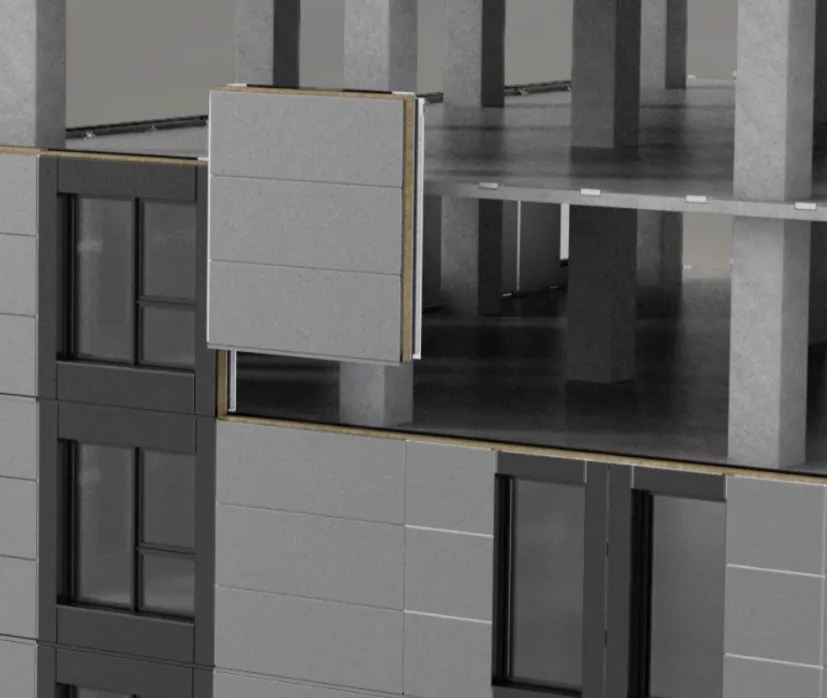
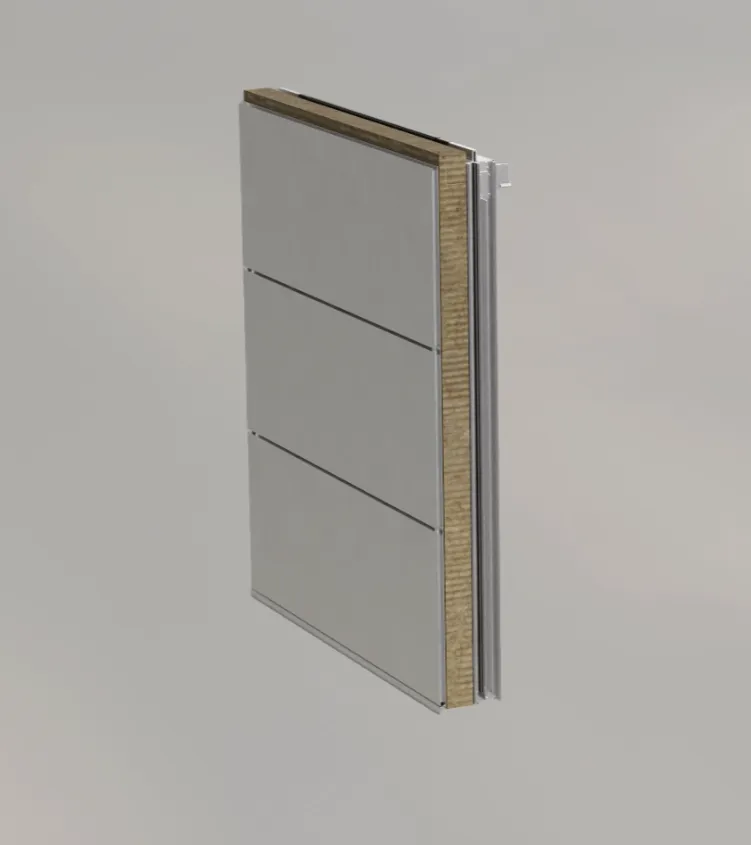
Why PACE WallTM Belongs to a New Category of High-Performance Building Envelope

In construction, many solutions are often grouped under the same term: prefabrication. Yet a curtain wall, a window wall, modular construction, a prefabricated façade, and a prefabricated building envelope do not solve the same problem.

This distinction is important.

To understand the difference between a curtain wall, a window wall, a modular solution, and a prefabricated building envelope, it is first necessary to look at the problem each solution is designed to solve.

Comparing all of these solutions as though they were interchangeable often leads to poor decisions. A curtain wall can be an excellent solution for creating an architectural glazed façade. A window wall can be an effective solution for integrating openings between floor slabs. Modular construction can accelerate the manufacturing of habitable volumes. But a high-performance prefabricated building envelope is designed around a completely different logic.

In summary: a curtain wall is primarily a glazed façade, a window wall is primarily an opening system installed between floor slabs, modular construction prefabricates habitable volumes, while PACE Wall industrializes the building’s exterior envelope.

PACE Wall is a high-performance prefabricated building envelope system designed to accelerate building enclosure, reduce dependence on jobsite variables, and improve real-world envelope performance at scale.

It was not designed to be a curtain wall.

It was not designed to be a window wall.

It was not designed to be a building module.

It was designed to industrialize one of the most critical components of a building: the exterior envelope.


Comparing the Right Things


SolutionWhat It Is

Primary Problem Solved


Limitation When Compared to PACE WallTM
Curtain WallLightweight façade, often extensively glazedArchitectural expression, transparency, and natural lightDoes not address the full scope of an insulated opaque building envelope
Window WallGlazed system typically installed between floor slabsOpenings, natural light, and integration into a conventional façadeHighly dependent on field interfaces and on-site installation quality
Modular ConstructionFactory-built building volumes or modular unitsIndustrialization of complete building sectionsNot specifically designed to optimize exterior envelope performance and generally applies to a different scale of construction
PACE WallTMHigh-performance prefabricated building envelopeRapid enclosure, insulation, weather-tightness, quality control, and repeatabilityA new category: not simply a variation of an existing system


The Real Question Is Not:

Is PACE WallTM better than a curtain wall, a window wall, or a modular solution?


The real question is:

What problem are we trying to solve?


Building Codes Define the Minimum. PACE WallTM Targets a Different Level of Performance


In a building project, codes establish minimum requirements. These requirements are essential, but they should never be confused with a performance ambition.

Applicable requirements vary depending on the building type, climate zone, compliance pathway, envelope composition, and jurisdiction. In every case, however, the regulatory framework is designed primarily to establish an acceptable baseline.

PACE Wall was developed with a different objective.

The system is designed to achieve up to R-50 effective thermal resistance in opaque wall sections, air leakage as low as 0.06 L/s·m², water penetration resistance tested up to 2000 Pa, and a design capable of resisting wind loads up to 5.3 kPa.

These figures help explain why PACE Wall should not be evaluated as simply another prefabricated façade, glazed façade, or conventional wall assembly. It is an industrialized envelope system whose performance is engineered from the outset, controlled during manufacturing, and consistently replicated on-site.


Building codes answer a minimum-performance question:

What level of performance must be achieved to be considered acceptable?


PACE Wall starts with a different question:

What level of performance can be achieved when the envelope is designed as a complete system, manufactured in a factory, and installed using a repeatable process?


That is not the same ambition.


A Curtain Wall Primarily Addresses the Need for a Glazed Façade

The curtain wall is a well-known, proven solution widely used in commercial, institutional, and high-rise buildings. It enables elegant, lightweight, and continuous glazed façades. It effectively addresses requirements for transparency, natural light, and architectural expression.

However, a curtain wall remains primarily a lightweight façade system, often largely glazed.

By itself, it does not replace the building’s entire opaque envelope. It is not necessarily intended to maximize the overall thermal resistance of opaque wall sections. Nor is it always designed to integrate insulation, openings, interfaces, air tightness, water resistance, and large-scale assembly repeatability into a single industrialized system.


A curtain wall answers a specific question:

How can we create a high-performance architectural glazed façade?


PACE Wall starts from a different question:

How can we enclose a building more quickly using an industrialized, insulated, weather-tight, repeatable, and durable envelope system?

The mandate is not the same.


A Window Wall Remains Primarily an Opening System Within the Building Envelope

A window wall occupies a different role within a building. It is generally installed between floor slabs and allows for significant glazed areas in multi-residential, commercial, and institutional projects.

It is an effective solution when seeking a balance between cost, installation speed, and natural daylight.

But once again, the comparison with PACE Wall is limited.

A window wall does not necessarily constitute a complete building envelope. Its actual performance often depends heavily on jobsite conditions, connections to adjacent assemblies, installation quality, trade coordination, and perimeter detailing.

This is where the distinction becomes significant.

PACE WallTM is not simply an opening within an envelope. It is an envelope strategy designed to integrate greater performance and control before the system even arrives on-site.

The objective is not simply to install a system.

The objective is to reduce the variables that compromise real-world building performance.

In a market where labor resources are under pressure, schedules continue to lengthen, and buildings are expected to consume less energy, this distinction is not theoretical.

It becomes operational.


Modular Construction Solves a Different Problem — at a Different Scale

Modular construction is often associated with prefabrication. This is why confusion is common.

But prefabrication does not necessarily mean modular construction.

Modular construction is generally intended to produce complete portions of a building: rooms, apartments, units, habitable volumes, or structural sections. It can be highly effective when a project is based on repeated modules and on a building height compatible with this construction approach.

Its limitations become apparent when a project requires significant height, greater architectural freedom, an independent structural system, or a highly efficient envelope without transforming the building into an assembly of prefabricated volumes.

PACE Wall does not do that.

PACE Wall does not manufacture living units.

It does not replace the primary structure.

It does not dictate the interior layout.

It does not turn the building into a stack of modules.

Instead, it focuses on one specific and critical component of the project: the exterior building envelope.

This distinction is fundamental.

Modular construction changes the way spaces are produced.

PACE WallTM changes the way the envelope is designed, manufactured, and installed.

One seeks to prefabricate volumes.

The other seeks to industrialize envelope performance.

That is why PACE Wall can be applied to high-rise projects of up to 70 storeys without imposing a modular construction approach on the building.


PACE WallTM Belongs to a Different Category: The High-Performance Prefabricated Building Envelope

The right way to understand PACE Wall is not to force it into an existing category. It is to start with the real problem.

The construction industry is facing three major pressures:

  1. Build faster
  2. Build with less available labor
  3. Build higher-performing buildings for the decades ahead

Traditional construction sites are vulnerable to many variables: weather, trade sequencing, labor availability, inconsistent execution quality, interface coordination, delays, and rework. Every poorly executed detail can weaken the building’s final performance.

PACE Wall was developed specifically to address this vulnerability.

Its principle is simple: move as much complexity as possible into a controlled environment, then deliver to the jobsite a prefabricated building envelope that is measurable and repeatable.

This approach makes it possible to accelerate building enclosure, reduce uncertainties, and improve performance consistency.

This is where comparisons with traditional categories reach their limits.

A curtain wall is primarily a glazed façade.

A window wall is primarily an opening system installed between floor slabs.

Modular construction is primarily a method of manufacturing habitable volumes.


PACE Wall is primarily a high-performance prefabricated building envelope.


Why This Distinction Matters for Developers, Architects, and Contractors

In a building project, the envelope is not simply a budget item. It influences comfort, energy consumption, durability, construction speed, trade coordination, and the long-term value of the building.

Yet it is still too often evaluated as a line-item cost.

That is a mistake.

A lower-performing envelope may appear less expensive initially, but can generate hidden costs: energy losses, occupant discomfort, condensation, jobsite rework, schedule delays, water infiltration issues, premature maintenance requirements, or long-term performance limitations.

PACE WallTM was designed to change that equation.

The system is designed to achieve up to R-50 effective thermal resistance in opaque wall sections, air leakage as low as 0.06 L/s·m², water penetration resistance tested up to 2000 Pa, and a design capable of resisting wind loads up to 5.3 kPa.

These metrics are not intended to decorate a technical data sheet. They are intended to demonstrate that envelope performance can be engineered, manufactured, and replicated with rigor.

It is this repeatability that distinguishes an industrialized approach from one that is assembled exclusively on-site.


PACE WallTM Does Not Replace Architecture. It Gives It a Better Foundation.

One of the most common concerns about prefabrication is the belief that it limits architectural creativity.

This concern is understandable, but it is often rooted in a misunderstanding between standardization and rigidity.

Intelligent standardization is not about making buildings identical. It is about controlling what should be controlled: performance, quality, interfaces, manufacturing, installation sequencing, and tolerances.

Architecture does not lose value because the building envelope is better controlled. On the contrary, it gains reliability.

PACE Wall does not seek to reduce architectural freedom. It seeks to provide projects with a stronger foundation: a high-performance envelope designed in a factory, adapted to the realities of the jobsite, and engineered to meet the demands of tomorrow’s buildings.


The Right Comparison Must Begin with the Project’s Intent

Curtain walls, window walls, and modular construction each have their role. Each has its strengths, limitations, and appropriate applications.

PACE Wall is not an attack on these solutions.

It is a response to a different challenge: building faster, improving control over envelope performance, and reducing dependence on jobsite variables.

If the primary objective is to create a fully glazed façade with a strong architectural expression, a curtain wall may be the right solution.

If the objective is to integrate windows between floor slabs within a conventional construction model, a window wall may be appropriate.

If the objective is to manufacture complete building units in a factory, modular construction may be relevant.

But if the objective is to enclose a building quickly with an industrialized, insulated, weather-tight, repeatable envelope designed to support superior energy performance, PACE Wall follows a different logic.

It does not seek to replace every existing solution. It seeks to solve a problem that existing solutions do not always address comprehensively: real-world envelope performance at scale, in a context of pressure on costs, schedules, and labor availability.


Is PACE Wall a Curtain Wall?

No. A curtain wall is primarily a lightweight façade system, often glazed, used to create architectural expression, transparency, and natural light.

PACE Wall is a high-performance prefabricated building envelope designed to integrate greater control, insulation, weather-tightness, and repeatability into the building’s exterior envelope.


Is PACE Wall a Window Wall?

No. A window wall is generally installed between floor slabs and primarily serves as an opening system within a conventional façade.

PACE Wall addresses the broader logic of the building envelope. It is designed to reduce jobsite variables and improve performance consistency at scale.


Is PACE Wall a Modular Solution?

No. Modular construction prefabricates building volumes or complete units.

PACE Wall does not manufacture apartments, rooms, or habitable modules. It industrializes the building’s exterior envelope.

The distinction is important: a modular solution may be effective for certain repetitive projects, but it generally imposes a volumetric construction approach. PACE Wall does not seek to transform a building into a collection of modules. Instead, it industrializes the envelope, including for high-rise projects of up to 70 storeys.


What Is the Difference Between Prefabrication and Modular Construction?

Modular construction is one form of prefabrication, but not all prefabrication is modular.

A modular building is designed around prefabricated volumes. A prefabricated building envelope, on the other hand, can be manufactured in a factory without turning the building into an assembly of habitable modules.

PACE Wall belongs to this second category: prefabrication of the building envelope, not prefabrication of complete living units.


What Is the Purpose of a High-Performance Prefabricated Building Envelope?

A high-performance prefabricated building envelope is designed to accelerate building enclosure, reduce jobsite variables, improve performance consistency, and support better long-term energy efficiency.

It makes it possible to move a portion of the project’s complexity into a factory environment, where conditions are more controlled, and then install a more predictable and repeatable solution on-site.

In the case of PACE Wall, this approach translates into measurable performance: up to R-50 effective thermal resistance in opaque wall sections, air leakage as low as 0.06 L/s·m², water penetration resistance tested up to 2000 Pa, and wind resistance engineered up to 5.3 kPa.


Why Is It Not Enough to Compare PACE Wall to Minimum Code Requirements?

Because minimum requirements are not an ambition. They are a threshold of acceptability.

Building codes are necessary. They protect the market from inadequate buildings. But they do not automatically define what a building should aspire to be in order to remain comfortable, durable, high-performing, and relevant 20, 30, or 50 years from now.

PACE Wall was developed to move beyond this minimum-performance mindset.

Not simply with a better product, but with a different approach: designing the envelope as a complete, industrialized, measurable, and repeatable system.

This is why comparisons with traditional solutions remain incomplete. We are not simply talking about another type of façade.

We are talking about another way of delivering building envelope performance.


Building Faster Should Never Mean Building to the Minimum

In a market that must deliver more buildings with less labor, greater energy constraints, and higher expectations for durability, the question is no longer simply which product to choose.

The question is which construction approach can consistently deliver on its promises in the real world.

PACE Wall was developed with this philosophy in mind.

Not to fit into an existing category.

Not to imitate curtain walls, window walls, or modular construction.

But to help create a new category: the high-performance prefabricated building envelope.

An envelope designed to accelerate construction, improve performance control, and build beyond what is merely required.